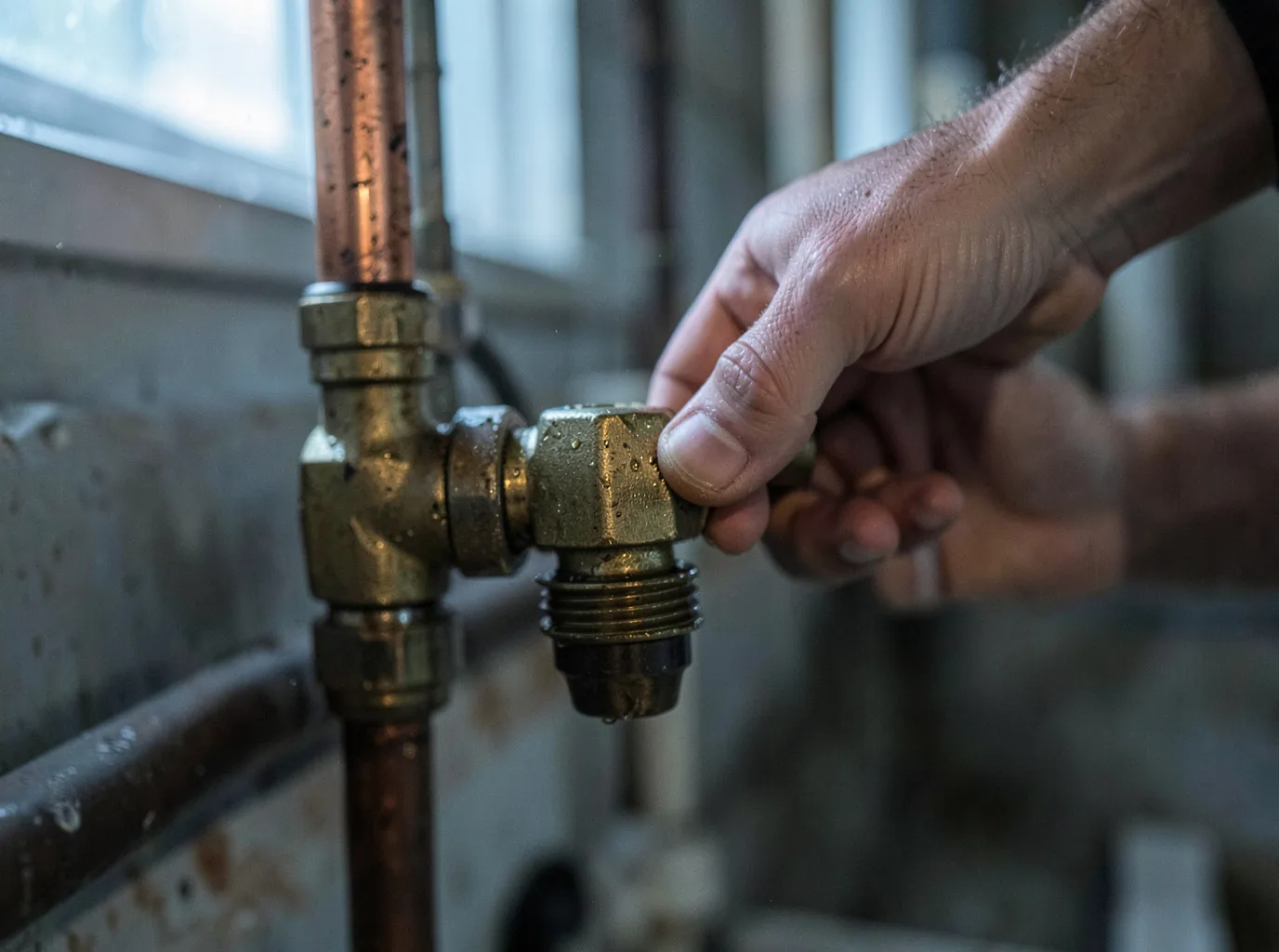
Not every pipe problem announces itself with a flood. Sometimes it's quieter: a water bill that crept up for no reason, a faint musty smell from under a cabinet, a ceiling tile with a yellow ring on it that wasn't there last month. That's usually a leaking pipe, and it's worth taking seriously before it becomes something bigger.
Signs You Have A Leak, Not Just A Damp Day
A leaking pipe shows itself in small ways at first. Look for:
- A water bill that jumped without any change in usage
- A damp or musty smell in a room with no obvious source
- Warped, soft, or discolored flooring, especially near a wall or under an appliance
- Staining on a ceiling or wall, sometimes with a faint ring pattern
- The sound of running or dripping water when everything is turned off
- Mold or mildew appearing in a spot that's usually dry
- A water meter that keeps spinning even with every fixture in the house off
That last one is a good self-check: turn off everything that uses water, check your water meter, wait 15 to 20 minutes without using anything, and check it again. If it's still moving, there's a leak somewhere in the system.
Why Pipes Start Leaking
Age is the biggest factor. Galvanized steel pipe rusts from the inside out and eventually pinholes through. Copper can develop small leaks from water chemistry issues (some municipal water is harder on copper than others) or from electrolysis where dissimilar metals meet. Joints and fittings are frequently the actual failure point rather than the pipe itself, a slip joint under a sink, a solder joint that was never quite right, a compression fitting that loosened over years of vibration.
Outside factors matter too. Tree roots can put pressure on buried lines. Ground settling shifts pipe runs slowly enough that you don't notice until a joint finally separates. High water pressure stresses the whole system over time, especially older plumbing that wasn't built for modern pressure levels. And sometimes it's simple wear: a washer or O-ring in a shutoff valve degrades and starts weeping.
What The Plumber Does To Find And Fix It
Finding a leak that isn't visible is the harder half of the job. A plumber working in Worthington, MA will typically start with the water meter test described above to confirm there's a leak in the system at all, then narrow down where. Visible leaks (under sinks, at the water heater, around toilet connections) are usually found fast. Hidden ones, inside a wall, under a slab, behind a shower surround, take more work: listening devices that pick up the sound of water moving through pipe, moisture meters to map where a wall or floor is wet, and sometimes a small inspection hole to confirm a suspected spot before opening anything larger.
Once the leak is located, the repair matches the cause. A failed fitting gets replaced outright. A pinhole in copper might get a slip coupling. A section of corroded galvanized pipe usually needs to be cut out and replaced rather than patched, since corrosion doesn't stop at one spot. If the leak is under a slab, that's a bigger job (see our water leak detection page for more on how slab leaks specifically get diagnosed) and the plumber may recommend either a spot repair by accessing the pipe directly, or rerouting the line above the slab to avoid cutting into concrete at all.
What Moves The Price
The plumber will look at the actual leak before naming a number, but generally: how hidden the leak is (a wall you need to open costs more labor than an exposed pipe under a sink), the pipe material, whether it's one fitting or a section riddled with corrosion, and how much access work is involved (cutting drywall, accessing a crawlspace, etc). You'll hear the price before the plumber starts any repair.
What You Can Do Before The Plumber Shows Up
- Note where you first noticed the sign (stain, smell, sound) so you can point the plumber there
- If you can access a shutoff valve for just that fixture or section, closing it may stop the leak without cutting all water to the house
- Move anything stored near the suspected leak area, boxes, furniture, that could get damaged or start growing mold
- Don't cut into drywall yourself trying to find it, you can miss the source and open up more repair work than you started with
- If it's affecting a ceiling, place a bucket under any active drip and watch for sagging, which can mean the leak has been going longer than it looks
Why Call This Line
This line connects you with an independent plumber working in Worthington, MA, it isn't a company sending its own crew, and the plumber you're connected with is the one who diagnoses and prices the repair on site. What the call gets you is speed: instead of searching and calling around, you make one call and we route you to a plumber working in your area. The line at (831) 300-2203 is answered 24/7, because a leak you finally noticed at 9pm doesn't want to wait until Monday to get looked at.
If the leak turns out to be more serious than expected, like a full break rather than a slow weep, the same plumber can handle a burst pipe repair on the same visit, and if low pressure elsewhere in the house is part of the picture, that's worth mentioning too under low water pressure repair.
Questions people ask about leaking pipe repair
How can I tell if I have a hidden pipe leak? Watch your water bill for unexplained increases, check for damp smells or soft flooring, and try the water meter test: shut off every fixture, note the meter reading, wait 15 to 20 minutes, then check again. If it moved, water is going somewhere in the system even though nothing is turned on.
How does a plumber find a leak inside a wall or under a floor? Plumbers use a combination of listening equipment that picks up the sound of moving water, moisture meters to map wet areas, and sometimes small inspection openings to confirm the spot before cutting into anything larger. It's a process of narrowing down rather than guessing.
Is a slow leak actually urgent, or can it wait? A slow leak can wait a day or two if it's not actively damaging anything, but it tends to get worse, not better, and hidden moisture behind walls or under floors can lead to mold and structural issues the longer it sits. Worth getting looked at soon rather than ignoring it.
Can a leaking pipe cause mold? Yes, especially when the leak is hidden behind a wall or under flooring where moisture sits without drying out. Mold can start within a couple of days in the right conditions, which is one more reason to get a suspected leak checked rather than waiting.
Will I need to open my walls or floor to fix a leaking pipe? Sometimes, but not always. Exposed leaks under sinks or at visible fittings don't require any demolition. Hidden leaks inside walls or under slabs may need a small access opening, and the plumber will explain what's necessary before doing any of it.
If something in your house in Worthington, MA points to a hidden leak, water bill, damp smell, a stain that keeps spreading, call (831) 300-2203 and get connected with a local plumber who can track it down.